Free live online workshop
New date
Sunday, October 4
3:00 PM to 4:30 PM Eastern
Live online with Pam Brown, CCDT
Calm Before Commands is a free 90-minute workshop for families whose dogs seem to forget everything when the world gets busy. Learn what's happening before your dog becomes overwhelmed, and what to do instead of repeating the cue louder.
Save My Free SpotFree. Can't make it live? Register anyway and get the replay.
Down 4 Paws Dog Training, Norwood MA · 83 five-star Google reviews
Sound familiar?
Here's the deal
Your dog probably isn't ignoring you.
Your dog isn't giving you a hard time.
They're having a hard time.
What to do about it, and how to spot it before the cue is lost, is what we cover in the workshop.
In 90 minutes
One idea, taught properly. Not forty tips you'll forget by Tuesday.
The early signs of overwhelm
What your dog does before the bark, the lunge, or the shutdown. So you can catch it in time.
Notice → Process → Reconnect → Respond
A four-step framework for what to do before you give another command.
Why "she regressed" is normal
What adolescence does to a dog who was doing great. Bad days don't erase progress.
Five things to try this week
Real walks, real visitors, real life. No perfect conditions required.
Real dogs, real life
The fix wasn't a new command. It was catching him sooner.
Archie was great in training and a mess on neighborhood walks: pulling, reacting to dogs on porches. His owner learned to get his attention earlier and make space before he tipped over.
Archie · Mixed breed, young adult
From pacing all night to sleeping through.
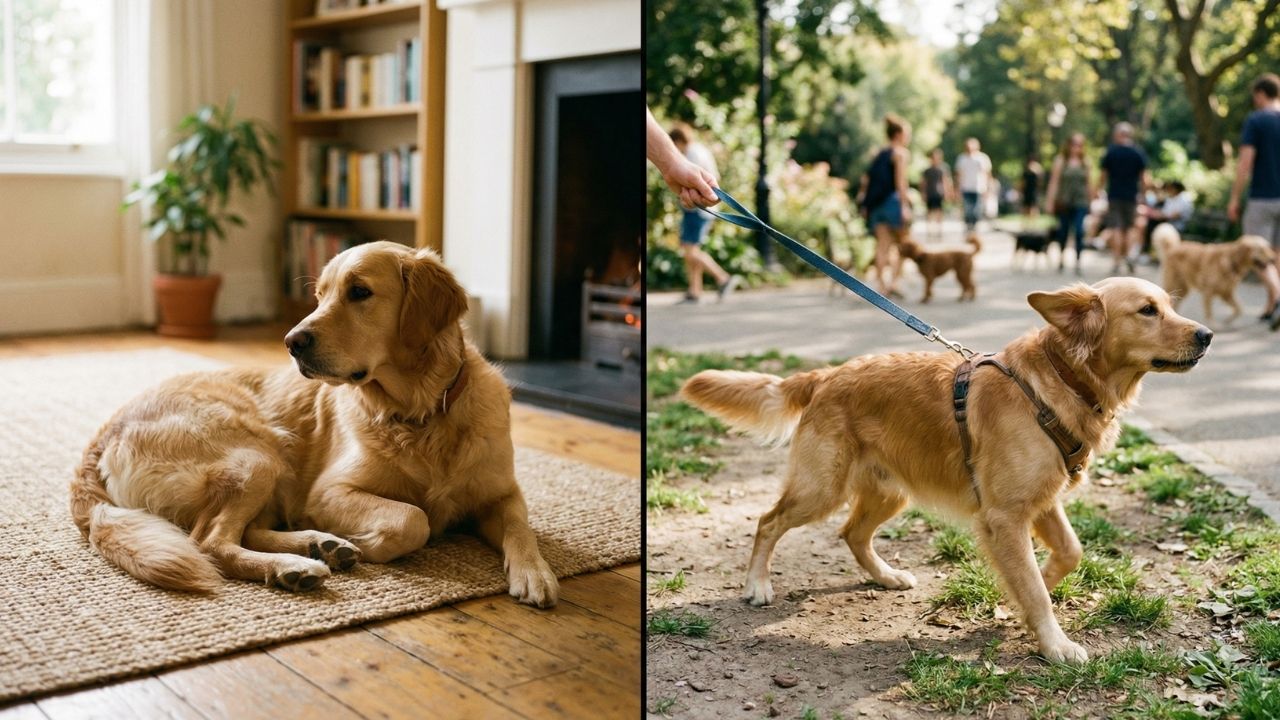
Maisie was good at home and overwhelmed outside. One packed day of walk, car, errands and a new dog, and she couldn't settle. Once her owner learned to spot the overload and build in rest, the evenings calmed down.
Maisie · Golden Retriever, puppy
Google review
"Before Pam, whenever he saw another dog on a walk, he would start barking and lunging. After Pam, he clocks another dog but does not get distracted or reactive."
Arthur's family

Pam Brown, CCDT
Founder & Head Trainer, Down 4 Paws Dog Training
Almost every family I meet says the same thing first: "He knows this. He's just not listening." I teach this workshop because I help families recognize what their dog is communicating before the behavior escalates.
When you can spot the early signs of overwhelm, you can help your dog recover and reconnect instead of asking for something they're not ready to give. That's the shift I want you to leave with.
Free registration
Sunday, October 4
3:00 PM to 4:30 PM Eastern · Live online
Can't make it live? Register anyway. Everyone who registers gets the replay.
No. This one is for you. Watch, take notes, then practice this week.
No. It's for any dog who does great at home and struggles outside, in adolescence, around visitors, or in busy places.
The workshop stands on its own. At the end I'll mention how to work with me if you want more support. That's it.
No. It's online. Join from anywhere.